Digital Marketing versus Traditional Marketing
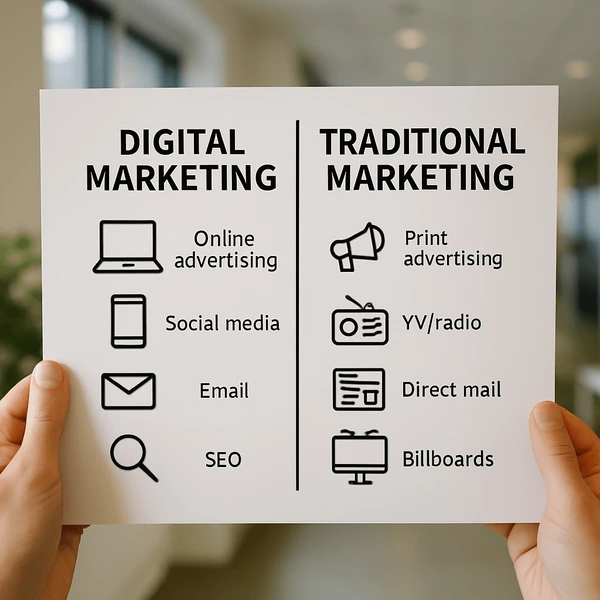
The debate on digital marketing vs. traditional marketing has been getting stronger as companies continuously adapt to changing technologies and customer behaviors. In today’s competitive world, companies must know how these two marketing methods differ and which can drive the best results. Just as the digital era is expanding at an exponential rate, brands regularly ask themselves whether they should operate offline, totally online, or with a mix. In this blog, we will discuss strengths, weaknesses, and future strategies that will influence both approaches, hence helping you make the right choice. Introduction to Digital marketing and Traditional Marketing Understanding digital marketing versus traditional marketing begins with a look at what each method offers. Traditional marketing includes offline promotional activities like newspapers, radio, TV ads, posters, billboards, and direct mail. These methods have been trusted for many years and are still very powerful in certain areas of the country and in certain demographics. On the other hand, digital marketing encompasses all activities conducted online, including social media marketing, SEO, email campaigns, websites, Google Ads, influencer marketing, and content marketing. As the activity of consumers on the internet grows, so does the dominance of digital marketing in current business strategies. What makes digital marketing so special? Among the greatest advantages of digital marketing versus traditional marketing is that digital marketing allows brands to reach a global audience at a much lower cost. Unlike offline marketing, which often cannot cross geographical boundaries, digital marketing enables businesses to connect with customers beyond borders instantly. This global accessibility makes digital platforms highly effective for brands aiming to scale quickly and efficiently while maintaining control over their marketing budgets. One of the strongest benefits of digital marketing is precise audience targeting. With digital platforms, businesses can target users based on age, gender, interests, location, and buying behavior. This advanced level of targeting is unmatched when compared to traditional marketing, which generally relies on broad audience exposure. As a result, digital marketing ensures that the right message reaches the right audience at the right time. Another major advantage lies in real-time data and analytics. Digital marketing provides detailed insights into impressions, click-through rates, engagement, conversions, and return on investment. Brands can monitor campaign performance instantly and make immediate adjustments to improve results. This flexibility and transparency clearly highlight why digital marketing versus traditional marketing is often viewed as the more efficient and measurable approach. Low-cost campaign execution is also a key reason businesses prefer digital strategies. Even with a small budget, companies can run advertisements on social media platforms, search engines, or video platforms like YouTube. This affordability makes digital marketing especially suitable for startups and small businesses that want maximum visibility without heavy spending, further strengthening the case for digital marketing versus traditional marketing. High engagement is another area where digital marketing excels. Features such as comments, likes, shares, messages, and online reviews allow brands to build strong relationships with their audience through two-way communication. This direct interaction increases trust, loyalty, and brand awareness, which explains why digital marketing is growing at such a rapid pace. Despite the rise of digital strategies, traditional marketing continues to remain relevant. When comparing digital marketing vs traditional marketing, traditional methods still play a significant role in business communication. One of its key strengths is strong local reach. Billboards, posters, flyers, and local newspapers are highly effective for targeting specific geographic areas, making them ideal for local businesses, small shops, and community events. Traditional marketing also carries a high trust value, particularly among older generations. Since it has been used for decades, platforms such as television, radio, and print media often feel more credible and authoritative. This trust factor keeps traditional marketing relevant even in the digital age and remains an important point in the discussion of digital marketing versus traditional marketing. Finally, traditional marketing offers tangibility and emotional impact. Physical materials like brochures and flyers can leave a lasting impression, while television and radio advertisements often connect emotionally through storytelling, music, and visuals. These emotional and physical elements give traditional marketing a unique advantage, proving that both approaches have value depending on business goals and target audiences. Differences Between Digital marketing and Traditional Marketing A side-by-side comparison of digital marketing versus traditional marketing clearly shows how each approach differs in cost, reach, interaction, flexibility, and tracking. Traditional marketing usually involves a high cost because businesses must spend on printing, broadcasting, and physical distribution through newspapers, television, radio, banners, or billboards. In contrast, digital marketing operates with low to moderate costs and offers scalable budget options, allowing even small businesses to start with minimal investment and increase spending as results improve. When it comes to reach, traditional marketing is mostly limited to a specific geographic location, making it effective for local awareness but restrictive for broader exposure. Digital marketing, on the other hand, provides global reach and instant visibility, enabling brands to connect with audiences across cities, countries, and even continents in real time. Another major difference lies in interaction digital marketing versus traditional marketing Traditional marketing follows a one-way communication model where the audience simply receives the message without immediate feedback. Digital marketing creates a two-way interactive experience, allowing users to like, comment, share, message, or respond directly to brands, which builds engagement and trust. Flexibility is also an important factor. In traditional marketing, once a campaign is launched, making changes can be difficult, time-consuming, and expensive. Digital marketing offers instant edits, updates, and optimization, enabling marketers to adjust content, targeting, or budgets quickly based on performance. Tracking and measurement further separate the two approaches. Traditional marketing makes it hard to accurately measure results, often relying on estimates or surveys. Digital marketing, however, is highly trackable, providing detailed analytics such as impressions, clicks, conversions, and return on investment. digital marketing versus traditional marketingBeing afreelance digital marketer in Thrissur, I focus on data-driven campaigns and personalized marketing strategies to deliver measurable results. Which One Is Better for Small Businesses? For a small business, the debate around digital marketing versus